

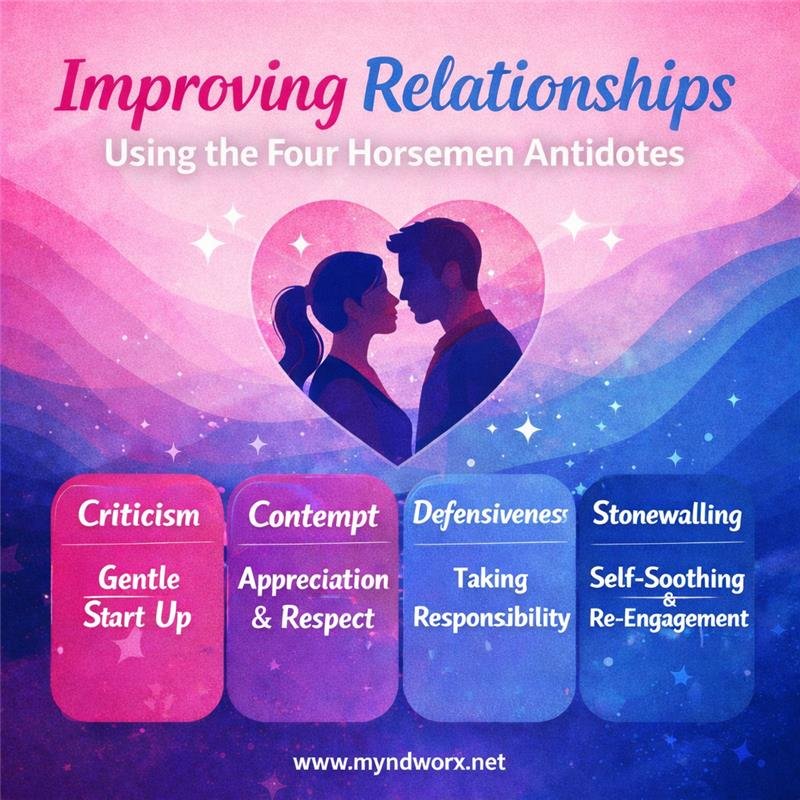
Improving Relationships Using the Four Horsemen and Their Antidotes
Healthy relationships are not defined by the absence of conflict. They are defined by how conflict is handled. One of the most well-researched frameworks for understanding relationship breakdown and repair comes from Dr. John Gottman’s concept of the Four Horsemen of the Apocalypse. These communication patterns, when left unchecked, predict relationship dissatisfaction and disconnection. The good news is that each horseman has a specific antidote that can dramatically improve communication, emotional safety, and trust.
Below is an overview of the Four Horsemen and what it looks like to intentionally practice their antidotes in everyday relationships.
Criticism and the Antidote of Gentle Start-Up
Criticism attacks a person’s character rather than addressing a specific behavior. Over time, it creates defensiveness and emotional distance.
A gentle start-up focuses on expressing needs and feelings without blame or judgment.
Examples of using a gentle start-up include:
“I feel overwhelmed when the house is messy, and I’d appreciate help with cleaning.”
“I feel disconnected lately and would really like some quality time together.”
A gentle start-up typically includes an “I” statement, a clear feeling, and a specific request. This approach reduces defensiveness and invites collaboration rather than conflict.
Contempt and the Antidote of Appreciation and Respect
Contempt is the most damaging of the Four Horsemen. It includes sarcasm, eye-rolling, mockery, and statements of superiority. Contempt communicates disrespect and erodes emotional safety.
The antidote is building a culture of appreciation, respect, and gratitude, especially during moments of stress.
Examples of practicing appreciation include:
Noticing and naming something your partner does well, even during disagreement.
Saying “thank you” for everyday contributions rather than assuming they go unnoticed.
Expressing admiration for your partner’s effort, character, or intentions.
Regular appreciation strengthens emotional connection and acts as a buffer during difficult conversations.
Defensiveness and the Antidote of Taking Responsibility
Defensiveness often shows up as denial, excuses, or counterattacks. While it is a natural reaction to feeling criticized, it prevents resolution and accountability.
The antidote is taking responsibility, even if only for a small part of the issue.
Examples of taking responsibility include:
“You’re right, I could have handled that differently.”
“I see how my tone came across, and I’m sorry.”
“I didn’t mean to hurt you, but I understand how that landed.”
Taking responsibility does not mean accepting all the blame. It means acknowledging your role and keeping the conversation focused on solutions rather than self-protection.
Stonewalling and the Antidote of Self-Soothing and Re-Engagement
Stonewalling occurs when one partner emotionally shuts down, withdraws, or disengages from the interaction. This often happens when someone feels overwhelmed or flooded.
The antidote is learning to self-soothe and intentionally return to the conversation once regulated.
Examples of healthy self-soothing include:
Taking a short break to breathe, stretch, or calm your nervous system.
Naming the need for a pause rather than disappearing or shutting down.
Returning to the conversation with a calmer tone and willingness to engage.
Stonewalling is not about avoidance; it is often a sign that the nervous system needs support before meaningful communication can continue.
Putting the Skills Into Practice
Improving communication is not about perfection. It is about awareness, repair, and practice. Even small shifts in how conversations begin, how responsibility is taken, or how appreciation is expressed can significantly change the emotional climate of a relationship.
These skills are especially powerful when practiced consistently and with support. Therapy can help individuals and couples recognize patterns, slow down reactions, and develop new ways of relating that feel safer and more effective.
If you would like support in improving your relationships and strengthening your communication skills, we invite you to schedule an appointment today. Professional guidance can help you move from conflict and disconnection toward understanding, respect, and lasting change.